
Tuesday, February 8, 2011


Monday, February 7, 2011

Thursday, July 2, 2009
Dont Know Why You Feel Tired All The Time?

Why Do I Feel Tired All The Time ?
So many times people ask me this question and it just amazes me, how much people are not aware of what they eat. Nowdays you see people from all age groups attacking the gym. Everyday we read articles on fitness in the newspapers and magazines, we all get influenced with the fitness shows on TV. Their are several reasons why you feel tired, those are -
- Stressful Lifestyle
- Lack of Sleep
- Less Water intake
- Improper Diet
- No Exercise at all
All the inspirational stories are great to start a workout but please take a proper consultation from an fitness expert, who is certified and knows about a human body and its functions. There are two types of trainers in the fitness industry in India or the countries where fitness industry is in a infant stage.
1) Type A -Who are only trained to teach exercises
2) Type B - Fitness experts who are certified and have the knowledge of Human Body and its Functions - e.g. anatomy / physiology / nutrition / injuries etc
3) Always go for the Type B Trainers who are Certified and Knowlegeable
Now back to why you feel tired all the time -
First lets know what gives you energy. There are three basic food groups Carbohydrate, Protein and Fats. All 3 have their respective function, main Energy sources are Carbohydrates (CHO) & Fats. The primary source of Energy Metabolised by the body is from Carbohydrates. Now there are two types of Carbohydrates Complex & Simple. Complex carbs give us Energy for a long time and Simple Carbohydrates give us instant but short term energy boost. So it is very important choose the right source of energy at the right time. Fats are also a source of energy, but Fats are used as the last source of energy. You can call it the reserve of your body. Foe example if you know anything about a bike then there is a ON position for Petrol and a Reserve position, so when the petrol is full its in ON position and when it s nearing to empty its on RESERVE position.
How to maintain Optimum Energy Levels throughout the day ?
Your diet should comprise of 55% CHO 25% Protein and 20 % of Fat ( diet can change deending on your goals). Now mostly all the people who read this will say, i am working out to reduce my fats and now you ask me to eat fat, why is that so?
Just remember - to metabolise Bad Fat you need to Eat Good Fat - SIMPLE ;)
So we are going to focus on eating unsaturated omega3 and omega6 fatty acids --- so all the food types which will supply you this.
How Do You Keep Motivated Yourself All The Time ?
You can keep yourself motivated by so many different ways, there are two ways you cn achieve your goal. First decide which one you are
Type 1) Someone who walks towards a Goal keeping in Mind what he/she wants to achieve
Type 2) Someone who doesnt like his/her present state of fitness or doesnt want to become fat , so your motivation is to go away from the problem, not towards the Goal.
Both the ways are fine, as both will ultimately reach a healthy physical and mental state.
So each time you want to be motivated look towards your goal if you are type 1 or look towards what you dont want if you are type 2, to stay motivated.
Otherways which may bring in a little bit boredom is the continuous repetition of the same exercises, this is natural and this can happen to most of u, including the athletes.
So at such times, choose a fun activity such as dance class, boxing, swimming, trekking, hiking, play with your dog or simply walk with your loved ones on the beach. Do a activity which is keeping up your heart rate up and is fun.
So many times people ask me this question and it just amazes me, how much people are not aware of what they eat. Nowdays you see people from all age groups attacking the gym. Everyday we read articles on fitness in the newspapers and magazines, we all get influenced with the fitness shows on TV. Their are several reasons why you feel tired, those are -
- Stressful Lifestyle
- Lack of Sleep
- Less Water intake
- Improper Diet
- No Exercise at all
All the inspirational stories are great to start a workout but please take a proper consultation from an fitness expert, who is certified and knows about a human body and its functions. There are two types of trainers in the fitness industry in India or the countries where fitness industry is in a infant stage.
1) Type A -Who are only trained to teach exercises
2) Type B - Fitness experts who are certified and have the knowledge of Human Body and its Functions - e.g. anatomy / physiology / nutrition / injuries etc
3) Always go for the Type B Trainers who are Certified and Knowlegeable
Now back to why you feel tired all the time -
First lets know what gives you energy. There are three basic food groups Carbohydrate, Protein and Fats. All 3 have their respective function, main Energy sources are Carbohydrates (CHO) & Fats. The primary source of Energy Metabolised by the body is from Carbohydrates. Now there are two types of Carbohydrates Complex & Simple. Complex carbs give us Energy for a long time and Simple Carbohydrates give us instant but short term energy boost. So it is very important choose the right source of energy at the right time. Fats are also a source of energy, but Fats are used as the last source of energy. You can call it the reserve of your body. Foe example if you know anything about a bike then there is a ON position for Petrol and a Reserve position, so when the petrol is full its in ON position and when it s nearing to empty its on RESERVE position.
How to maintain Optimum Energy Levels throughout the day ?
Your diet should comprise of 55% CHO 25% Protein and 20 % of Fat ( diet can change deending on your goals). Now mostly all the people who read this will say, i am working out to reduce my fats and now you ask me to eat fat, why is that so?
Just remember - to metabolise Bad Fat you need to Eat Good Fat - SIMPLE ;)
So we are going to focus on eating unsaturated omega3 and omega6 fatty acids --- so all the food types which will supply you this.
How Do You Keep Motivated Yourself All The Time ?
You can keep yourself motivated by so many different ways, there are two ways you cn achieve your goal. First decide which one you are
Type 1) Someone who walks towards a Goal keeping in Mind what he/she wants to achieve
Type 2) Someone who doesnt like his/her present state of fitness or doesnt want to become fat , so your motivation is to go away from the problem, not towards the Goal.
Both the ways are fine, as both will ultimately reach a healthy physical and mental state.
So each time you want to be motivated look towards your goal if you are type 1 or look towards what you dont want if you are type 2, to stay motivated.
Otherways which may bring in a little bit boredom is the continuous repetition of the same exercises, this is natural and this can happen to most of u, including the athletes.
So at such times, choose a fun activity such as dance class, boxing, swimming, trekking, hiking, play with your dog or simply walk with your loved ones on the beach. Do a activity which is keeping up your heart rate up and is fun.
Yoga & Sports

Yoga In Sports- Yoga plays a very important role in any competitive sports of the modern era. If Yoga is a tree then it has many branches which are used in todays sports for Mental and Physical preparation. In yoga a sportsman will find exercises to fine tune his mind and body. Yoga can be applied at various stages of a competitive sport today.
Pre Competition Phase
Pre Competition Phase
1) Meditation
2) Corrective Asanas
3) Balancing & Stability Asanas
4) Asanas for Improving Flexibility
5) Breathing Exercises for Concentration and Improving Lung Capacity
All these exercises are going to help prepare the athlete for the competitive phase by setting targets by visualisations, improving performance by corrective asanas which are used to reduce weaknesses, improve balance and stability, improve ROM with asanas for flexibilty and improve concentration and lung capacity wih pranayam.
2) Corrective Asanas
3) Balancing & Stability Asanas
4) Asanas for Improving Flexibility
5) Breathing Exercises for Concentration and Improving Lung Capacity
All these exercises are going to help prepare the athlete for the competitive phase by setting targets by visualisations, improving performance by corrective asanas which are used to reduce weaknesses, improve balance and stability, improve ROM with asanas for flexibilty and improve concentration and lung capacity wih pranayam.
Conpetitive Phase
1) Breathing Exs for removing anxiety and clarity of thought
2) Dynamic Asanas for warming up before the Game
3) Asanas for recovery after competition
4) Relaxation techniques for better recovery e.g. shavasana
2) Dynamic Asanas for warming up before the Game
3) Asanas for recovery after competition
4) Relaxation techniques for better recovery e.g. shavasana
Breathing exercises such as kapalbhati and nadi shddhi if done before the competition , helps in removing anxiety plus removes negative thoughts and healps a athlete reach a calmer state. Dynamic asanas for warming up, and static asanas for recovery ( 30 secs +). Instant relaxation techniques like shavasa for faster recovery after the game.
OFF Season or Post Competitive phase
Here the athlete works on the rehabilitation , recovery and preparation for the competitive phase- Application of yoga more or less is the same as the Pre Competitive Phase
Meditation and Recovery exercises should be given priority along with the corrective asanas.
Yoga is has multiple benefits and a deeper look around, in the world of sports today will give you a better insight of yoga being used and applied in every sport. The more you practice yoga the more benefits you get. Hari Aum! Rahul Patil
Meditation and Recovery exercises should be given priority along with the corrective asanas.
Yoga is has multiple benefits and a deeper look around, in the world of sports today will give you a better insight of yoga being used and applied in every sport. The more you practice yoga the more benefits you get. Hari Aum! Rahul Patil
Sports Massage Therapy


I got interested in the field of massage for its therapeutic qualities on the mind and the body. This curiosity and hunger for knowledge lead me to Premier Global Fitness institute London UK where i did Level 3 Sports Massage Therapy and fitness certification. Massage has become an integral part of the todays athletic regimen from sports medicine clinics, to college training rooms, to professional locker rooms to Olympic training. Growing number of Fitness Professionals believe that massage can provide an extra edge to the athletes who participate in high performance sports. A complete workout routine includes not only the exercise itself, but also caring for the wear-and-tear and minor injuries that naturally occur with strenuous movement. The physiological and psychological benefits of massage make it an ideal complement to a total conditioning program.
Incorporating massage in your conditioning program has many benefits. It helps you get into good shape faster, and with less stiffness and soreness. It helps you recover faster from heavy workouts, and relieves conditions which may cause injury.
Sports Massage Techniques
Each sport and athletic event uses muscle groups in a different way. Sports massage therapists are familiar with each muscle, the muscle groups and how they are affected by the specific movements and stresses of each sport. They also are trained in the appropriate uses of hydrotherapy and cryotherapy. Postural Assessment and Physical Assessment is also a part of sports massage .
After a Subjective and Objective Assessment of the client, Sports massage therapy includes the use of one or more of the following techniques:
Deep Swedish Massage
Compression Massage
Cross-Fiber Massage - Friction techniques applied in a general manner to create a stretching and broadening effect in large muscle groups; or on site-specific muscle and connective tissue, deep transverse friction applied to reduce adhesions and to help create strong, flexible repair during the healing process.
Trigger Point/Tender Point Massage - Combined positioning and specific finger or thumb pressure into trigger/tender points in muscle and connective tissue, to reduce the hypersensitivity, muscle spasms and referred pain patterns that characterize the point. Left untreated, such trigger/tender points often lead to restricted and painful movement of entire body regions.
Lymphatic Massage - Stimulation of specialized lymphatic-drainage pathways, which improves the body¹s removal of edemas and effusion.
Trouble spots - You may also have your own unique trouble spots, perhaps from past injuries. A massage therapist can pay special attention to these areas, monitor them for developing problems, and help keep them in good condition. An experienced massage therapist can also compliment treatment received from other health care professionals for various injuries.
Three Areas of Sports Massage
Sports massage involves -
1) Prevention and maintenance programs,
2) On-site treatment before and after an athletic event, and
3) Rehabilitation programs for those who are injured during the program.
Incorporating massage in your conditioning program has many benefits. It helps you get into good shape faster, and with less stiffness and soreness. It helps you recover faster from heavy workouts, and relieves conditions which may cause injury.
Sports Massage Techniques
Each sport and athletic event uses muscle groups in a different way. Sports massage therapists are familiar with each muscle, the muscle groups and how they are affected by the specific movements and stresses of each sport. They also are trained in the appropriate uses of hydrotherapy and cryotherapy. Postural Assessment and Physical Assessment is also a part of sports massage .
After a Subjective and Objective Assessment of the client, Sports massage therapy includes the use of one or more of the following techniques:
Deep Swedish Massage
Compression Massage
Cross-Fiber Massage - Friction techniques applied in a general manner to create a stretching and broadening effect in large muscle groups; or on site-specific muscle and connective tissue, deep transverse friction applied to reduce adhesions and to help create strong, flexible repair during the healing process.
Trigger Point/Tender Point Massage - Combined positioning and specific finger or thumb pressure into trigger/tender points in muscle and connective tissue, to reduce the hypersensitivity, muscle spasms and referred pain patterns that characterize the point. Left untreated, such trigger/tender points often lead to restricted and painful movement of entire body regions.
Lymphatic Massage - Stimulation of specialized lymphatic-drainage pathways, which improves the body¹s removal of edemas and effusion.
Trouble spots - You may also have your own unique trouble spots, perhaps from past injuries. A massage therapist can pay special attention to these areas, monitor them for developing problems, and help keep them in good condition. An experienced massage therapist can also compliment treatment received from other health care professionals for various injuries.
Three Areas of Sports Massage
Sports massage involves -
1) Prevention and maintenance programs,
2) On-site treatment before and after an athletic event, and
3) Rehabilitation programs for those who are injured during the program.
The Benefits of Sports Massage
Regular sports massage can :
Regular sports massage can :
1) Reduce the chance of injury, through proper stretching and event preparation, and through deep tissue massage;
2) Improve range of motion and muscle flexibility, resulting in improved power and performance;
3)Shorten recovery time between workouts;
4) Maximize the supply of nutrients and oxygen through increased blood flow;
5) Enhance elimination of metabolic by-products of exercise.
2) Improve range of motion and muscle flexibility, resulting in improved power and performance;
3)Shorten recovery time between workouts;
4) Maximize the supply of nutrients and oxygen through increased blood flow;
5) Enhance elimination of metabolic by-products of exercise.
Thursday, April 30, 2009
Conditioning Exercises For High Altitude Training
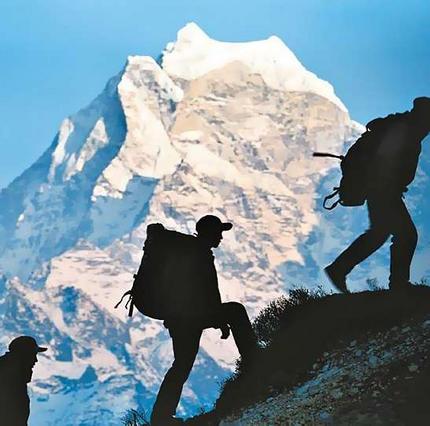
Conditioning Exercises for High Altitude Activities
Every year a lot of individuals decide to do a trek or a hike to a beautiful mountain range. The idea is to get away from the daily stress of life and participate in a activity which elevates you to a sense of freedom.
I love the attitude and the enthusiasm these individuals possess, hats off to them. A lot of them are working class who have never done such activities and in the process of excitement which comes along the adventure, we all forget to make ourselves physically ready for such an intense activity.
High Altitude Activies press a huge demand on the human body and it often can lead to injuries and a bad experience.. So instead of having fun and enjoying the adventure, we end up struggling and in pain throughout.
So whenever you decide, start your preparations way in advance. atleast 3 - 4 months prior to your actual date of travel.
** What you need to Improve in your fitness -
-Improve your Cardio vascular capacity - Condition your Heart, do cardiovascular activities in your set heart rate zone (65 to 85 % of 220- age )
-Improve your Core Stability and Core Strength - always do stability exercises first and then movement type.
-Train for Muscular Endurance and Muscular Strength
-Follow a Healthy Diet - Fruits / Carbs / Proteins / Essential Fats
-Do Yoga -- Pranayam for improving Lung Capacity and Asanas fro Flexibility & Stability.
-Stability of ankles / knees & lumbo pelvic hip complex ( v imp) as the terrain outside is rough.
-Consult a fitness expert before you start a program.
-Do a fitness test before you start a fitness program so you know your improvements by the end of your program.
** Cardio Vascular ACTIVITIES such as -
1. Uphill Walking
2. Jogging ( Beach / Treadmill )
3. Stair Climbing
4. Mountain Biking
5. Circuit Training ( is also a strength and endurance building activity)
**Core Stability / Strength ACTIVITIES such as - (follow the sequence given below)
STATIC TYPE CORE EXS
1. Supine Bridge ( floor / swiss ball )
Every year a lot of individuals decide to do a trek or a hike to a beautiful mountain range. The idea is to get away from the daily stress of life and participate in a activity which elevates you to a sense of freedom.
I love the attitude and the enthusiasm these individuals possess, hats off to them. A lot of them are working class who have never done such activities and in the process of excitement which comes along the adventure, we all forget to make ourselves physically ready for such an intense activity.
High Altitude Activies press a huge demand on the human body and it often can lead to injuries and a bad experience.. So instead of having fun and enjoying the adventure, we end up struggling and in pain throughout.
So whenever you decide, start your preparations way in advance. atleast 3 - 4 months prior to your actual date of travel.
** What you need to Improve in your fitness -
-Improve your Cardio vascular capacity - Condition your Heart, do cardiovascular activities in your set heart rate zone (65 to 85 % of 220- age )
-Improve your Core Stability and Core Strength - always do stability exercises first and then movement type.
-Train for Muscular Endurance and Muscular Strength
-Follow a Healthy Diet - Fruits / Carbs / Proteins / Essential Fats
-Do Yoga -- Pranayam for improving Lung Capacity and Asanas fro Flexibility & Stability.
-Stability of ankles / knees & lumbo pelvic hip complex ( v imp) as the terrain outside is rough.
-Consult a fitness expert before you start a program.
-Do a fitness test before you start a fitness program so you know your improvements by the end of your program.
** Cardio Vascular ACTIVITIES such as -
1. Uphill Walking
2. Jogging ( Beach / Treadmill )
3. Stair Climbing
4. Mountain Biking
5. Circuit Training ( is also a strength and endurance building activity)
**Core Stability / Strength ACTIVITIES such as - (follow the sequence given below)
STATIC TYPE CORE EXS
1. Supine Bridge ( floor / swiss ball )
2. Side Plank
3. Plank
4. Floor prone cobra
5. Quadruped Opposite arm & leg lifts
3. Plank
4. Floor prone cobra
5. Quadruped Opposite arm & leg lifts
MOVEMENT TYPE CORE EXS
1. Short lever Crunch ( floor / swiss ball)
2. Long lever Crunch (floor / swiss ball )
3. Swiss Ball dynamic Cobra
4. Reverse Crunch
5. Cable or Resistence tube Spinal Rotation ( lunge position or swiss ball)
** Muscular endurance & Muscular strength
1. Circuit Training ( full body / upper body / lower body )
2. Weight training focussed more on the big body parts such as Back / Chest / Legs, repetetions in the range of 15 to 20 / and 50 to 60 % of 1RM intensity.
**Diet - Diet with a proper protein intake which helps you built and strenthen your muscles. ( Consult a Dietician or a Fitness Professional )
** Yoga is very important to improve Lung capacity and Muscular flexibility and stability. A normal routine can be e.g. -
1. Kapalbhati
2. sectional breathing
3. Nadishuddhi
4. suryanamaskars
5. standing balancing asanas
6. sitting forward bending and backward bending asanas
7. sitting spainal twisting asanas
8. nadishuddhi with omkar chanting
9. shavasana
10. this a sample program ( consult a yoga professional for a individualised program)
**Ankle stability and knee stability can be trained on reebok core board. Hip pelvic and Lumbar stability is also trained in core stability workout.
**HAPPY TREKK ING HAVE FUN
**Sample Weekly Training Program
1. Short lever Crunch ( floor / swiss ball)
2. Long lever Crunch (floor / swiss ball )
3. Swiss Ball dynamic Cobra
4. Reverse Crunch
5. Cable or Resistence tube Spinal Rotation ( lunge position or swiss ball)
** Muscular endurance & Muscular strength
1. Circuit Training ( full body / upper body / lower body )
2. Weight training focussed more on the big body parts such as Back / Chest / Legs, repetetions in the range of 15 to 20 / and 50 to 60 % of 1RM intensity.
**Diet - Diet with a proper protein intake which helps you built and strenthen your muscles. ( Consult a Dietician or a Fitness Professional )
** Yoga is very important to improve Lung capacity and Muscular flexibility and stability. A normal routine can be e.g. -
1. Kapalbhati
2. sectional breathing
3. Nadishuddhi
4. suryanamaskars
5. standing balancing asanas
6. sitting forward bending and backward bending asanas
7. sitting spainal twisting asanas
8. nadishuddhi with omkar chanting
9. shavasana
10. this a sample program ( consult a yoga professional for a individualised program)
**Ankle stability and knee stability can be trained on reebok core board. Hip pelvic and Lumbar stability is also trained in core stability workout.
**HAPPY TREKK ING HAVE FUN
**Sample Weekly Training Program
day 1 - yoga and core
day 2 - full body circuit training
day 3 - cardio
day4 - rest
repeat the cycle from day 5 again
Thursday, December 11, 2008
Essential Info For Every Trainer & a Client

The Importance of Subjective & Objective Assessment for a effective Plan
To safe guard a fitness professional and the client, records must be maintained for each client. these should contain the following details-
*clients medical history
*details of present physical conditions, if any
*any earlier assessment records
*any treatment taken
*any other details which you may find while consulting
The clients signature is required to-confirm accuracy of personal and medical information
consent to assessment / training & treatment agree to communication of information to third party
The S.O.A.P. procedure
S - Subjective - information gathered from the client in response to questioning.
O - Objective - information gathered from physical examination.
A - Assessment - interpretation of the information gathered during the subjective and objective phases.
P - Plan - of training with a set of exersises specifically designed around the needs of the client, also anykind of treatment and referrals if required.
The clients record must contain the details of any present conditions like e.g. pain, any restrictions or limitation they face during normal daily activity, if the condition has been asssessed, and if under treatment, any referral notes by a doctor or a therapist. Appropriate questions need to be asked such as, " what happened" "what was the experience" and, "what was the effect". from the response the relevant information should be recorded.
Finding during the objective assessment regarding observations made, testing to identify the degree of function, palpation, pain responses and the results from any spacial test must be documented.
A summary of the findings and the actions to be taken, set of exercises, treatment techniques, and any referral should be noted, followed by the plan of treatment and post-care advice.
All the records of Exercises and any kind of treatment or referrals should be maintained.
Subscribe to:
Posts (Atom)